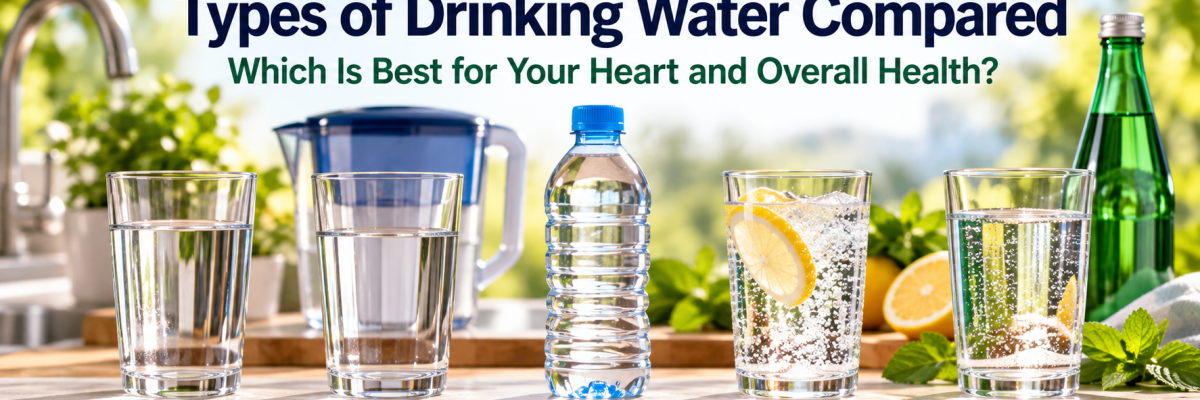
Types of Drinking Water Compared: Which Is Best for Your Heart and Overall Health?
Friday Food Talk | Nutripledge
Food is medicine—eat with intention for a healthier heart and overall wellness!
💧 Tap, filtered, bottled, sparkling, or mineral water—which is the healthiest choice?
Water is essential for life, but with so many types of drinking water available, choosing the best one can feel confusing. Is filtered water healthier than tap water? Does mineral water offer extra benefits? Is sparkling water as hydrating as still water?
At Nutripledge, we believe informed beverage choices are an important part of heart-healthy nutrition and overall wellness.
In this Friday Food Talk, we'll compare five popular types of drinking water, explain their benefits and potential concerns, and share practical resources to help you check your tap water quality and select the right water filter.
Why Is Drinking Water Important for Heart Health?
Water is an essential nutrient that supports nearly every system in the body. Adequate hydration helps maintain normal blood volume and circulation, regulate body temperature, support kidney function, and promote healthy digestion. Water also helps transport nutrients throughout the body and supports normal physical and cognitive performance.
For heart health, one of the most important benefits of plain water is that it provides hydration without added sugar. Replacing sugar-sweetened beverages with plain water can reduce added-sugar intake and support healthy dietary habits linked to better cardiovascular and metabolic health. However, drinking more water than your body needs has not been shown to prevent or reverse heart disease.
Types of Drinking Water: A Side-by-Side Comparison
| Water type | Main benefits | What to watch for | Nutripledge Food Coach |
|---|---|---|---|
| Tap water | Affordable, convenient, and often fluoridated | Local water quality and household plumbing | 🟢 Green Dot |
| Filtered water | May improve taste and reduce specific contaminants | Filter certification and maintenance | 🟢 Green Dot |
| Bottled water | Convenient and portable | Cost, packaging waste, source, and storage | 🟢 Green Dot |
| Sparkling water | Hydrating alternative to sugary soda | Added sugar, sodium, acidity, and bloating | 🟢 Green Dot if plain |
| Mineral water | May provide calcium and magnesium | Mineral and sodium content vary | 🟢 Green Dot if plain |
*Food Coach ratings assume the water is safe to drink and contains no added sugar. A Green Dot does not verify the safety of an individual water source.
1. Tap Water vs. Bottled Water: Is Tap Water Safe?
Tap water is one of the most affordable and accessible ways to stay hydrated. In the United States, public drinking water systems are regulated under the Safe Drinking Water Act and must meet applicable drinking water standards. However, water quality can vary by source, treatment system, distribution infrastructure, and in-home plumbing.
How to Check Your Tap Water Quality
Before buying bottled water or investing in a filtration system, find out what's in your local drinking water.
Helpful resources:
EWG Tap Water Database: Search for information about contaminants reported by your local water utility.
EPA Consumer Confidence Reports: Learn how to access your public water system's annual drinking water quality report.
EWG sometimes uses health-based guidelines that are more stringent than federal drinking water standards. Exceeding an EWG guideline does not automatically mean your water violates federal regulations. If you use a private well, appropriate testing is especially important.
Nutripledge Tip: Before assuming bottled water is healthier, check your local tap water quality. Safe tap water is often an excellent everyday choice.
2. Filtered Water Benefits: Do You Really Need a Water Filter?
Filtered water has passed through a treatment system designed to reduce certain substances. Depending on the filtration technology, it may improve taste, reduce odors, or lower concentrations of specific contaminants.
Common Types of Water Filters
Activated carbon filters: Often used in pitchers, refrigerator dispensers, and faucet-mounted systems. Some are certified to reduce chlorine taste and odor and selected contaminants.
Reverse osmosis systems: Can reduce a broader range of dissolved substances, depending on the system and its certification.
Specialized filters: Designed to reduce particular contaminants or address specific water-quality concerns.
How to Choose the Best Water Filter
The best water filter depends on what's actually in your water. Start by reviewing your water quality report, identifying contaminants of concern, and selecting a product independently certified to reduce those specific substances. Always follow the manufacturer's instructions for maintenance and filter replacement.
Water Filter Resources
💧 EWG Water Filter Guide — Explore filtration technologies and options.
💧 CDC Guide to Choosing Home Water Filters — Understand what different filters can and cannot remove.
💧 NSF Water Treatment Standards — Learn about independent filter certifications.
Nutripledge Tip: A more expensive filter isn't necessarily better. Choose one certified to address the contaminants you need to remove.
3. Bottled Water vs. Tap Water: Which Is Better?
Bottled water is convenient for travel, outdoor activities, and situations where safe tap water is unavailable. However, bottled water isn't automatically safer, healthier, or more nutritious than properly treated tap water. Some bottled water comes from springs or groundwater, while other products use municipal water that undergoes additional treatment.
Things to Consider Before Buying Bottled Water
Cost: Bottled water is generally much more expensive than tap water.
Environmental impact: Single-use plastic bottles require resources to manufacture and transport and contribute to packaging waste.
Storage: Follow storage recommendations and avoid excessive heat or direct sunlight.
Source: Read labels to understand whether you're purchasing purified, spring, or mineral water.
Nutripledge Tip: If your tap water is safe, carrying a reusable water bottle is a practical way to save money and reduce packaging waste.
4. Sparkling Water Benefits: Is It as Healthy as Still Water?
Sparkling water contains dissolved carbon dioxide, giving it a refreshing, fizzy texture.
Plain sparkling water is just as hydrating as still water.
For people who enjoy carbonation, it can be an excellent alternative to sugar-sweetened soda. However, some flavored sparkling beverages contain added sugar, sweeteners, sodium, or acidic ingredients. Carbonation can also cause bloating in some individuals, and frequent exposure to acidic beverages may contribute to dental erosion.
Nutripledge Tip: Choose plain or unsweetened sparkling water and check the Nutrition Facts label for added sugars and sodium.
5. Mineral Water Benefits: Is Mineral Water Good for Your Heart?
Mineral water naturally contains dissolved minerals from its source. Depending on the brand, these may include calcium, magnesium, sodium, and potassium. Calcium and magnesium support normal muscle, nerve, and cardiovascular function. However, the mineral content varies considerably between products, and not all mineral waters supply nutritionally meaningful amounts. Some mineral waters contain substantial sodium, which may matter for people managing high blood pressure or following sodium-restricted diets.
Nutripledge Tip: Compare mineral content and sodium levels before paying a premium for mineral water. It's not automatically healthier than safe tap or filtered water.
How Much Water Should You Drink Every Day?
You've probably heard the recommendation to drink eight glasses of water daily. However, hydration needs vary from person to person. The National Academies established the following Adequate Intake values for total daily water among generally healthy adults:
| Group | Total daily water |
|---|---|
| Adult women | Approximately 2.7 liters (91 fl oz) |
| Adult men | Approximately 3.7 liters (125 fl oz) |
These amounts include water from food and all beverages, not just drinking water. Your individual needs depend on activity level, climate, age, diet, and medical conditions. People with heart failure, kidney disease, or prescribed fluid restrictions should follow individualized guidance from their healthcare professionals.
Six Simple Ways to Stay Hydrated
Keep a reusable water bottle nearby.
Drink water regularly throughout the day according to your needs.
Choose water instead of sugar-sweetened beverages.
Add lemon, basil, mint, or cucumber for natural flavor. Try our refreshing lemon basil herbal tea :)
Increase fluid intake appropriately during hot weather or prolonged physical activity.
Include water-rich fruits and vegetables in your diet.
Frequently Asked Questions About Drinking Water
Is filtered water healthier than tap water?
Not necessarily. If your tap water meets applicable safety standards, filtering may be optional. Certified filters can help reduce specific contaminants.
Is bottled water safer than tap water?
Not automatically. Both bottled and public tap water are subject to regulatory requirements, although oversight differs. Safety depends on the specific water source, treatment, handling, and storage.
Is sparkling water good for heart health?
Plain, unsweetened sparkling water can fit into a heart-healthy diet. Its main advantage is that it provides hydration without the added sugar found in many soft drinks.
Does mineral water lower blood pressure?
Some mineral waters contain calcium and magnesium, but drinking mineral water has not been shown to reliably treat high blood pressure. The sodium content also varies by brand.
What is the healthiest type of drinking water?
The healthiest everyday choice is water that is safe, accessible, affordable, and appropriate for your individual needs. Safe tap water or properly filtered tap water is often an excellent option.
How can I find out what's in my tap water?
Review your water utility's annual Consumer Confidence Report and explore the EWG Tap Water Database. If you have a private well or concerns about household plumbing, consider appropriate water testing.
Nutripledge Food Coach Rating: 🟢 Green Dot
Plain tap, filtered, bottled, sparkling, and mineral water can all earn a Green Dot with our Food Coach when safe to drink and free of added sugar. Water provides essential hydration without the added sugars and calories commonly found in sweetened beverages. For heart health, prioritize safe drinking water and an overall dietary pattern rich in vegetables, fruits, whole grains, legumes, nuts, and seeds.
The Nutripledge Takeaway: Which Water Should You Choose?
When comparing different types of drinking water, remember that the most expensive option isn't necessarily the healthiest. For many people, safe tap water or appropriately filtered water is an excellent everyday choice. Sparkling water offers a refreshing alternative to sugary soda, while mineral water may provide additional minerals. Bottled water can be convenient when you need it. Ultimately, the best water is safe, accessible, and helps you stay adequately hydrated.
💧 Your heart works around the clock. Make water your everyday drink of choice!
Food is medicine—eat with intention for a healthier heart and overall wellness!
References
National Academies of Sciences. Dietary Reference Intakes for Water, Potassium, Sodium, Chloride, and Sulfate. https://www.nationalacademies.org/read/10925
Centers for Disease Control and Prevention. About Choosing Home Water Filters. https://www.cdc.gov/drinking-water/prevention/about-choosing-home-water-filters.html
U.S. Environmental Protection Agency. Consumer Confidence Reports. https://www.epa.gov/ccr
Environmental Working Group. Tap Water Database. https://www.ewg.org/tapwater/
Environmental Working Group. Water Filter Guide. https://www.ewg.org/tapwater/water-filter-guide.php
NSF. Standards for Water Treatment Systems. https://www.nsf.org/consumer-resources/articles/standards-water-treatment-systems
This article is intended for general nutrition education and does not replace individualized medical advice. Drinking water quality and hydration needs vary. Follow local drinking water advisories and consult your healthcare professional when you need individualized fluid guidance.
Disclaimer: The information provided on this page is for general nutrition and wellness education only and is not intended to replace individualized medical or nutrition advice. Individual nutrition needs vary based on health status, medical conditions, medications, and other factors. Please consult your healthcare provider or a qualified nutrition professional for guidance specific to your needs. For personalized nutrition support, explore our Medical Nutrition Therapy services.