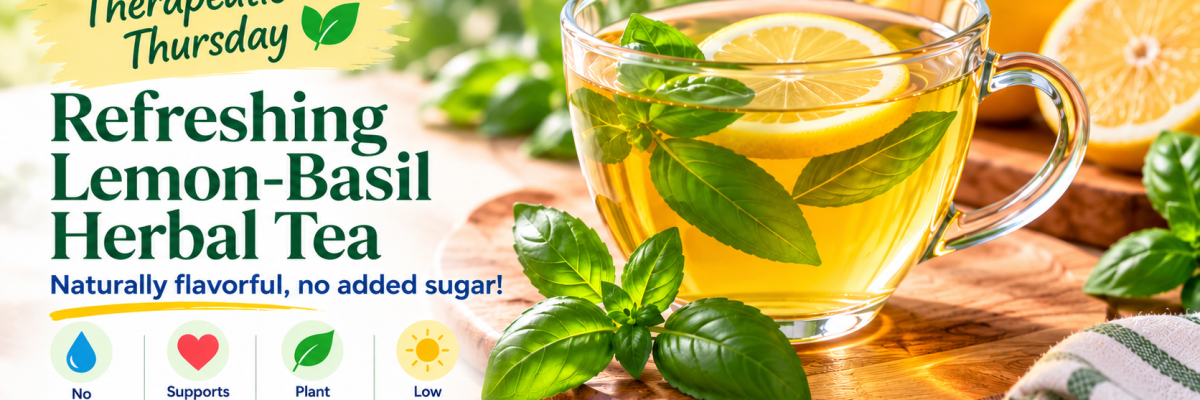
Lemon Basil Herbal Tea: Benefits and an Easy Heart-Healthy Recipe - Therapeutic Thursday Recipe
*Jump to full recipe card here.Nutripledge Therapeutic Thursday Recipe | Heart Health & Overall Wellness
Food is medicine—eat with intention for a healthier heart and overall wellness!
Before you grab your next sugary drink, why not treat your body to a refreshing cup of Lemon Basil Herbal Tea? This simple, naturally flavorful herbal infusion combines fresh basil, lemon, and optional ginger to create a soothing beverage without added sugar. Enjoy it warm on a cool morning or chilled over ice for a refreshing afternoon drink.
At Nutripledge, we encourage intentional eating and drinking habits that support heart health and overall wellness. Replacing sugar-sweetened beverages with unsweetened herbal tea is one small change that can make a meaningful difference over time.
What Is Lemon Basil Herbal Tea?
Lemon Basil Herbal Tea is a naturally caffeine-free herbal infusion made by steeping fresh basil leaves in hot water and adding lemon for a bright, citrusy flavor. Unlike many bottled teas, sodas, and specialty beverages, this homemade recipe requires no added sugar, artificial sweeteners, or preservatives. Basil also contains naturally occurring plant compounds that have attracted scientific interest for their potential antioxidant activity.
But what does the science actually say about basil tea benefits?
Five Potential Benefits of Lemon Basil Herbal Tea
1. A Heart-Healthy Alternative to Sugary Drinks
One of the most practical benefits of Lemon Basil Herbal Tea is that it can replace sugary drinks. Frequent consumption of sugar-sweetened beverages is associated with a greater risk of weight gain, type 2 diabetes, and cardiovascular disease. Choosing plain water or unsweetened herbal tea instead can help reduce added-sugar intake and support a heart-healthy dietary pattern.
Nutripledge Heart-Health Tip: Make unsweetened beverages your everyday choice. Save sugar-sweetened drinks for occasional enjoyment rather than making them a daily habit.
2. Provides Naturally Occurring Antioxidant Compounds
Basil contains plant compounds, including polyphenols and aromatic constituents such as eugenol, that have demonstrated antioxidant activity in laboratory research. Antioxidants help protect cells from oxidative stress caused by free radicals. Excessive oxidative stress is associated with aging and the development of chronic conditions, including cardiovascular and metabolic diseases. However, the amount of these compounds extracted into homemade basil tea varies.
3. Supports Healthy Hydration
Adequate hydration supports normal circulation, temperature regulation, digestion, and overall health. Adding fresh basil and lemon to water provides natural flavor without relying on added sugar. For people who find plain water unappealing, Lemon Basil Herbal Tea offers an enjoyable way to increase fluid intake.
4. Creates a Calming Daily Ritual
A warm cup of herbal tea can be a pleasant addition to a relaxing daily routine. Holy basil, also called Tulsi, has traditionally been used in Ayurvedic medicine to support the body's response to stress. Some small clinical studies using standardized holy basil preparations have reported improvements in perceived stress and certain stress-related measurements. However, these findings do not establish that a homemade cup of sweet basil tea lowers or normalizes cortisol.
5. Fits Into a Heart-Healthy Eating Pattern
Lemon Basil Herbal Tea contains negligible calories when prepared as a strained infusion without sweeteners. It can complement a dietary pattern rich in vegetables, fruits, whole grains, legumes, nuts, and seeds. Rather than relying on a single beverage for health benefits, focus on consistent food and lifestyle choices that support healthy blood pressure, cholesterol, blood glucose, and body weight.
Sweet Basil vs. Holy Basil (Tulsi): Are They the Same?
Although their names are similar, sweet basil and holy basil are different plants.
Sweet basil (Ocimum basilicum) is commonly used in cooking and is the ingredient in this Nutripledge recipe.
Holy basil or Tulsi (Ocimum tenuiflorum) has a long history of use in traditional Ayurvedic medicine.
Tulsi is frequently described as an adaptogenic herb because of its traditional use in supporting the body's response to stress. Research has explored standardized Tulsi preparations for possible effects on stress, blood glucose, and other cardiometabolic risk factors. A systematic review of human studies found promising results but emphasized the need for larger, more rigorous trials. Importantly, findings from studies using holy basil extracts should not be automatically applied to sweet basil tea.
How to Make Lemon Basil Herbal Tea at Home
This easy herbal tea recipe requires just a few ingredients and can be enjoyed hot or cold.
Preparation time: 5 minutes
Steeping time: 5–7 minutes
Servings: 2
Serving size: Approximately 1 cup (240 mL)
Ingredients
2 cups water
10–12 fresh sweet basil leaves, washed
2 thin lemon slices
½ teaspoon freshly grated ginger (optional)
Ice cubes (optional)
Instructions
Bring the water to a gentle boil in a small saucepan.
Remove from heat and add the fresh basil leaves and optional ginger.
Cover and steep for 5–7 minutes.
Strain into two cups and add the lemon slices.
Enjoy warm or refrigerate and serve over ice.
Nutripledge Tip: For the best flavor, use fresh basil leaves and avoid adding sugar or honey. If you enjoy stronger herbal flavors, adjust the steeping time to your preference.
Lemon Basil Herbal Tea Nutrition Facts
Estimated nutrition per 1-cup serving:
Calories: Approximately 0
Total fat: 0 g
Saturated fat: 0 g
Cholesterol: 0 mg
Added sugars: 0 g
Protein: Approximately 0 g
Nutrition values are estimates for a strained infusion. Actual values depend on ingredient quantities and preparation.
Nutripledge Food Coach Rating: 🟢 Green Dot
This refreshing tea earns a Green Dot as a hydrating, naturally flavored beverage with no added sugar and negligible calories when prepared as directed. Its main nutritional advantage is helping replace sugar-sweetened beverages, not providing large amounts of vitamins, minerals, or protein.
Is Basil Tea Good for Heart Health?
Basil tea can be part of a heart-healthy lifestyle, particularly when it replaces beverages high in added sugar. However, there is insufficient clinical evidence that drinking homemade basil tea directly lowers LDL cholesterol, prevents atherosclerosis, or treats heart disease. For stronger, evidence-based heart-health benefits, combine healthy beverage choices with a dietary pattern emphasizing fiber-rich plant foods, unsaturated fats, regular physical activity, adequate sleep, and other healthy lifestyle habits.
Frequently Asked Questions About Basil Tea
Can I drink lemon basil tea every day?
For most healthy adults, a modest amount of culinary sweet basil prepared as an unsweetened infusion can be enjoyed as part of a varied diet. People with medical conditions or those taking medications should seek individualized advice, particularly before using concentrated herbal products.
Does basil tea lower cortisol?
Some studies of standardized holy basil extracts suggest potential effects on stress-related outcomes. However, there is not enough evidence to conclude that homemade sweet basil tea lowers or normalizes cortisol.
Is lemon basil tea good for diabetes?
Unsweetened basil tea can be a useful alternative to sugary beverages for people managing blood glucose. It should not replace prescribed diabetes treatment or be relied upon to lower blood sugar.
Does basil tea help with weight loss?
Basil tea has not been proven to cause weight loss. However, replacing calorie-containing sugary beverages with unsweetened tea may help reduce overall calorie intake.
Does lemon basil tea contain caffeine?
No. This recipe uses fresh basil, lemon, and water rather than traditional tea leaves, making it naturally caffeine-free.
The Nutripledge Takeaway: Small Changes, Healthier Habits
Healthy living doesn't always require major changes. Sometimes, it starts with something as simple as choosing a refreshing herbal tea instead of a sugary beverage. Lemon Basil Herbal Tea offers natural flavor, hydration, and a pleasant way to enjoy herbs without added sugar.
Remember, heart health is shaped by your overall dietary pattern and daily habits—not by any single food or beverage. Make your next drink an intentional choice!
Food is medicine—eat with intention for a healthier heart and overall wellness!
References
Jamshidi N, Cohen MM. The Clinical Efficacy and Safety of Tulsi in Humans: A Systematic Review of the Literature. Evidence-Based Complementary and Alternative Medicine. 2017;2017:9217567. https://pubmed.ncbi.nlm.nih.gov/28400848/
Lopresti AL, et al. A randomized, double-blind, placebo-controlled trial investigating the effects of an Ocimum tenuiflorum (Holy Basil) extract on stress, mood, and sleep in adults experiencing stress. Frontiers in Nutrition. 2022. https://pubmed.ncbi.nlm.nih.gov/36185698/
American Heart Association. Tips for Cutting Down on Sugar. https://www.heart.org/en/healthy-living/healthy-eating/eat-smart/sugar/tips-for-cutting-down-on-sugar
American Heart Association. Sip Smarter. https://www.heart.org/en/healthy-living/healthy-eating/eat-smart/sugar/sip-smarter-infographic
Disclaimer! Please note that this page is not medical advice. It offers only general guidance for a healthy and balanced diet. This food does not guarantee an adequate or safe intake level for any individual. Please consult your healthcare provider and explore our Medical Nutrition Therapy services for a meal plan tailored to your needs.